

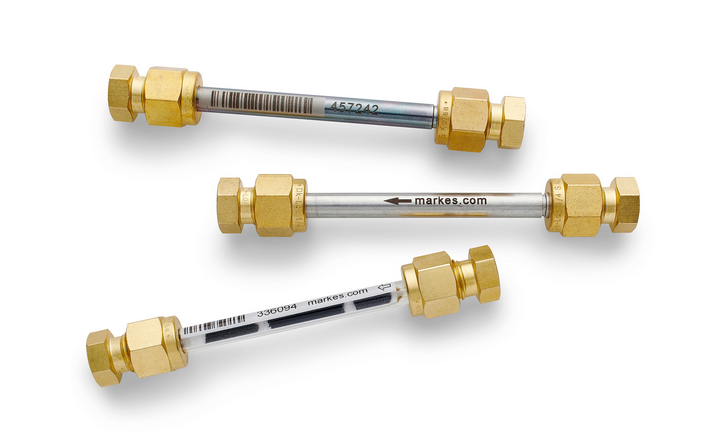
In short: EPA Method TO-17 measures VOCs collected by active sampling on sorbent tubes and analysed by thermal desorption (TD) GC–MS. Reliable quantification depends on calibration standards loaded onto the tube in the gas phase, the same physical state as the field sample. GasMix and LiqMix dynamic dilution systems generate these matrix-matched, multipoint standards on demand, from ng to µg levels. The approach was validated in peer-reviewed work (University of Pretoria & SASOL, MethodsX, 2025) using Markes TD tubes, with R² up to 0.9955 and 99% agreement against a certified reference material.
What is EPA Method TO-17?
EPA Compendium Method TO-17 is the U.S. EPA method for determining volatile organic compounds in ambient air using active sampling onto sorbent tubes, followed by thermal desorption and GC–MS analysis. Air is pumped through a tube packed with one or more sorbents; analytes are retained, then thermally desorbed, refocused on a cold trap, and injected onto the GC column.
Compared with canister-based Method TO-15, TO-17 is well suited to a wide volatility range, to trace (sub-ppb) work, and to field campaigns where canisters are impractical. Its accuracy, however, hinges entirely on how the calibration standards are prepared and introduced onto the sorbent.
Why TO-17 needs gas-phase, matrix-matched standards
For a calibration to be valid under TO-17, the standard should reach the sorbent the same way the sample does, adsorbed from the gas phase, at a representative flow rate. There are two ways to load standards onto tubes:
- Liquid spiking (e.g. a calibration solution loading rig): a liquid standard is injected onto the tube and swept on by carrier gas. TO-17 permits this but requires a high-purity solvent, ideally far more volatile than the analytes, to limit solvent artifacts and co-elution.
- Gas-phase loading by dynamic dilution: a controlled gas-phase standard is passed through the tube along the sampling flow path. Analytes adsorb onto the bed exactly as a field sample would, giving true matrix-matched calibration, free of injection-solvent effects.
The second route is the more rigorous, and it is exactly what GasMix and LiqMix deliver.
How GasMix and LiqMix calibrate sorbent tubes
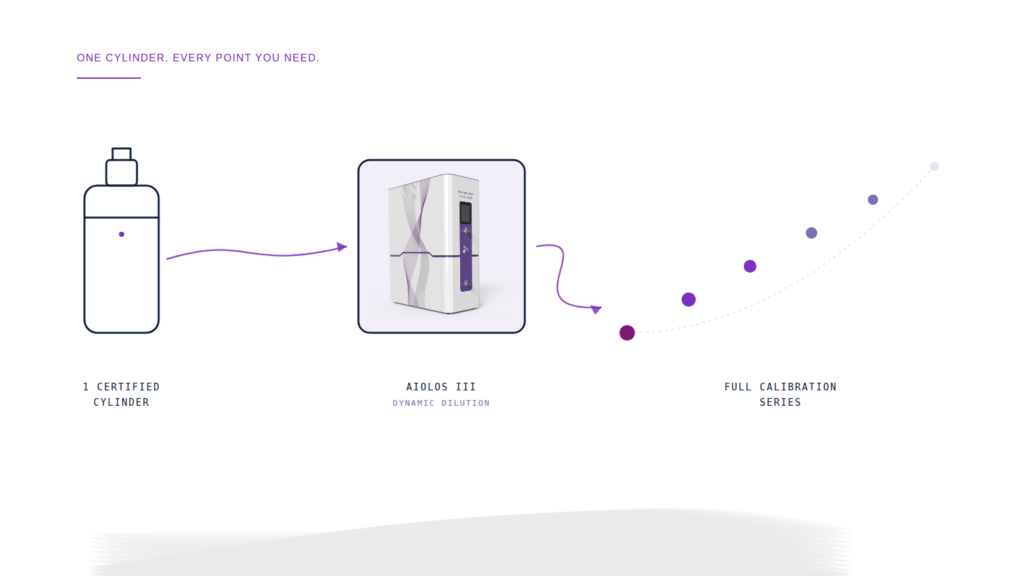
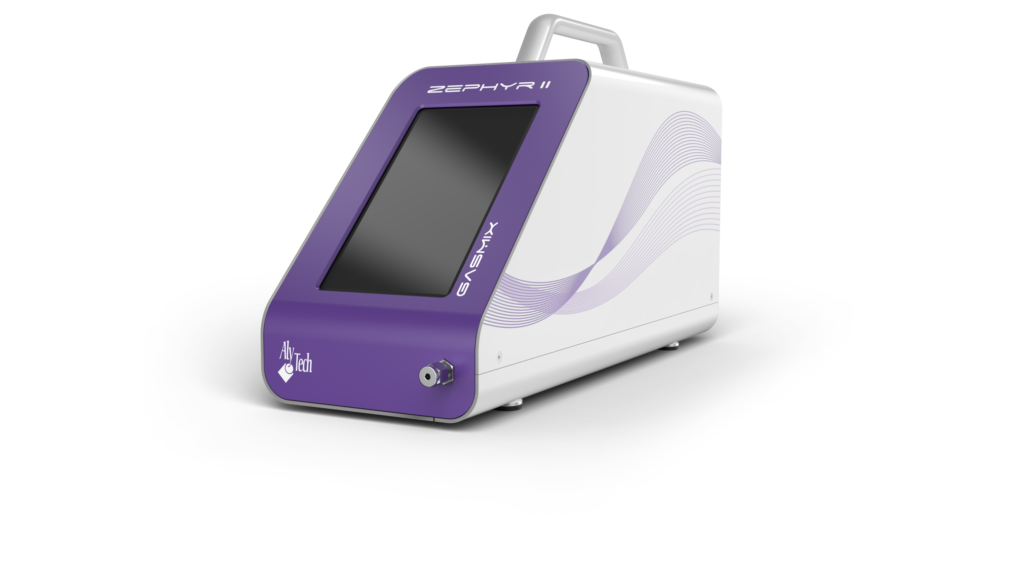
The GasMix platform produces customised calibration gas mixtures by software-controlled dynamic dilution, then passes them through the sorbent tube at a metered flow that mimics active sampling:
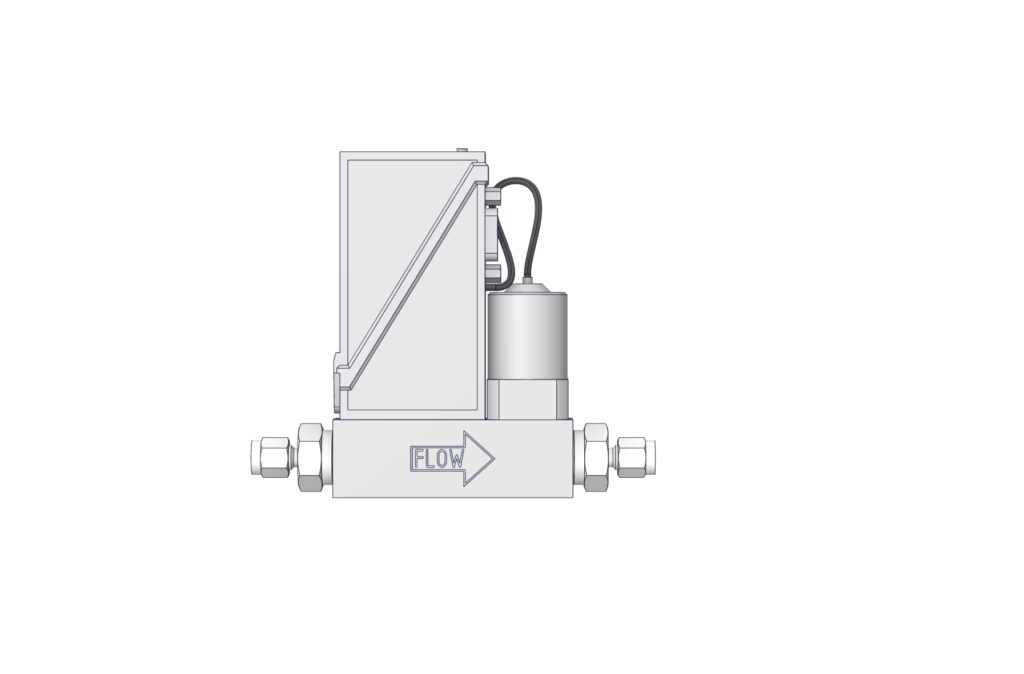
- GasMix dilutes from compressed-gas sources (cylinders, permeation tubes) using mass flow controllers, building a multipoint concentration series automatically.
- LiqMix generates gas-phase standards directly from liquid standards: a Coriolis mass flow controller meters liquid into a temperature-regulated vaporiser, where it evaporates into a carrier gas and mixes with up to four further gas channels. This is ideal for compounds with no cylinder standard.
- Cascade (two-stage option) chains two dilution stages of up to 10⁴ each, reaching low-ppb (nL/L) concentrations for ambient-level TO-17 work. All lines are heated to the delivery point to prevent re-condensation of heavier analytes.
Because mixtures are generated on demand, the laboratory avoids the cost, lead time and high-pressure hazard of cylinder standards, and can prepare reactive or unstable mixtures that cannot be stored.
Meeting TO-17 quality-control requirements
TO-17 adopts the GC–MS calibration framework of Method TO-15/TO-15A and adds sorbent-specific sampling controls. Dynamic dilution supports both:
| TO-17 requirement | Criterion | How GasMix / LiqMix supports it |
|---|---|---|
| Initial calibration (ICAL) | ≥ 5 levels; average-RRF RSD ≤ 30% or linear/quadratic R² ≥ 0.995; each level within ±30% of theoretical | Generates ≥ 5 precise, traceable levels on demand |
| Daily / continuing verification (CCV) | Standard within ±30% of theoretical | Reproduces the same standard day to day |
| Breakthrough | Analyte on backup section < 5% of total | Loads through a tube + backup tube in series for direct verification |
| Safe sampling volume (SSV) | ≈ 2/3 of the breakthrough volume | Controlled flow/volume loading enables tube-loading studies |
| Distributed volume pairs | Paired tubes at different volumes to confirm integrity | Repeatable, programmable volumes per tube |
| Precision | ≤ 25% RPD (replicate/duplicate) | Demonstrated 3–4% RSD on loaded tubes |
Independent validation: BTEX on Markes TD tubes
In Leakwe et al. (MethodsX, 2025), a LiqMix Cascade generated BTEX (benzene, toluene, ethylbenzene, o-xylene) gas-phase standards that were loaded onto Radiello graphitized-carbon cartridges (Carbograph 4) housed in Markes thermal desorption tubes, desorbed onto a Tenax focusing trap, and analysed by GC–MS. An identical backup cartridge was connected in series to monitor breakthrough, which is the TO-17 control in practice.
Key outcomes:
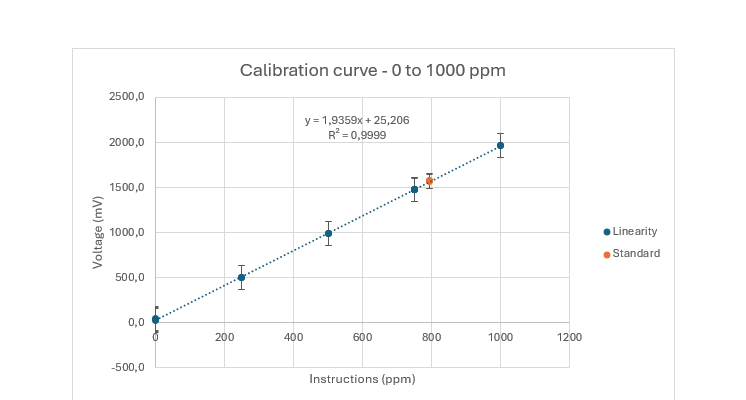
- Linearity after thermal desorption: R² = 0.9941 (benzene), 0.9899 (toluene), 0.9917 (ethylbenzene) and 0.9955 (o-xylene), across ng-level loadings (e.g. 10–690 ng for benzene) representative of ambient sampling.
- Precision: %RSD of 3.2–4.2% on the loaded tubes, far inside the ≤ 25% RPD precision expectation.
- Trueness: 99% average agreement against a Restek BTEX certified reference material, confirming metrological equivalence to a cylinder CRM.
- Range: the same platform also covered µg-level occupational loadings via solvent-extraction tubes (R² up to 0.9998), so one system spans ambient to occupational concentrations.
A practical note on calibration model: several thermal-desorption R² values (0.9899–0.9955) sit just below the strict R² ≥ 0.995 regression threshold, so the average-RRF model, which is explicitly permitted by TO-15A and used under TO-17, is the appropriate basis for compliance, and the measured 3–4% RSDs clear its ≤ 30% limit comfortably.
Reference: N.M. Leakwe, W. Welthagen, P.B.C. Forbes, “Production of in situ mixed gas phase volatile organic compound standards for sorbent tube applications,” MethodsX 15 (2025) 103705. https://doi.org/10.1016/j.mex.2025.103705