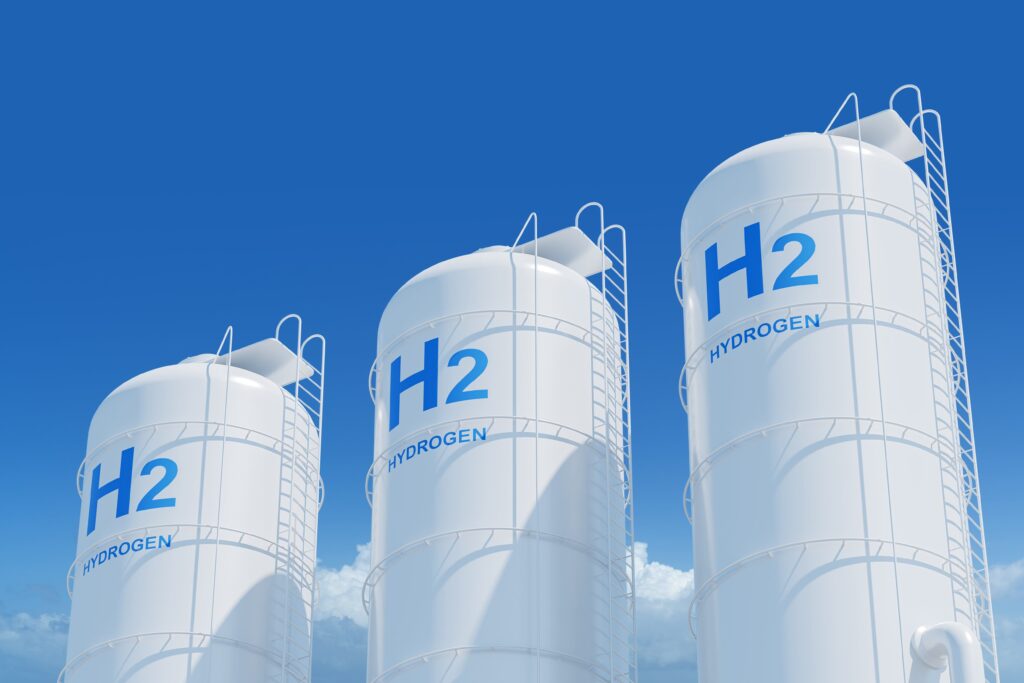
Whether hydrogen fuel originates from a grey, blue, or green source, its purity grade becomes critical when the final destination is a fuel cell. The analytical challenge is considerable: impurity limits are expressed in Parts per Billion (ppb) for several chemical compounds, and calibrating the analyzers that verify these limits is far from trivial.
Why Are Hydrogen Fuel Purity Limits So Low?
The first question any analytical chemist asks when reading the maximum authorized impurity levels is: why are these limits so low?
The answer lies in how fuel cell engineers established these thresholds, working backwards from a performance requirement. A fuel cell used as a vehicle engine generator must operate for 200,000 km (125,000 miles) with no major service or breakdown.
Impurities contained in hydrogen fuel deposit on the fuel cell surface, reducing its catalytic activity — and therefore the engine’s performance. Because this is a cumulative phenomenon, engineers calculated the total allowable mass of each contaminant across the full vehicle lifetime. This calculation was formalized in ISO 14687, the international standard defining hydrogen fuel quality for proton exchange membrane (PEM) fuel cells.
The method is straightforward: take the maximum tolerable mass of a given impurity, divide it by the total quantity of hydrogen consumed over the vehicle’s lifetime (expressed in mass or volume), and the result is the maximum concentration for that compound. Simple logic — but it leads to trace-level concentrations, often in the ppb or even sub-ppb range.
Two Major Challenges for the Analytical Chemist
The analyst responsible for certifying hydrogen fuel quality faces two simultaneous challenges:
- Finding the right analytical instrument capable of detecting and quantifying impurities at ppb levels.
- Obtaining reliable calibration gases at those same concentration levels, on a regular basis, with traceable and narrow uncertainty values.
The Problem with Commercial Certified Gas Standards
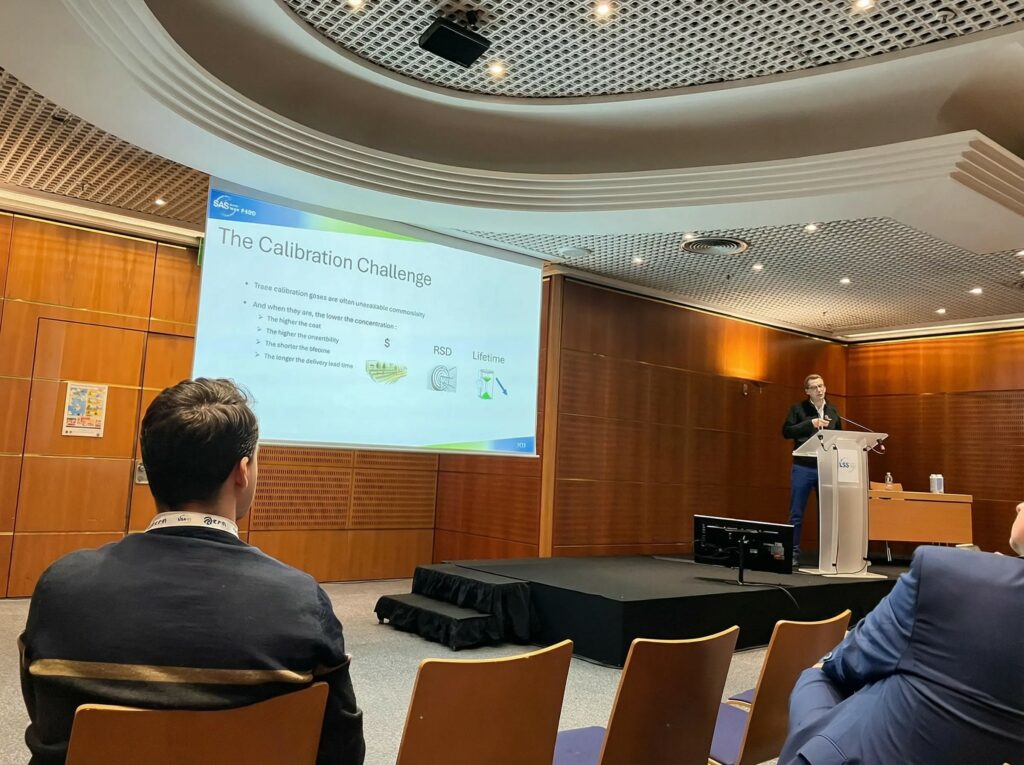
For most of the compounds listed in ISO 14687, commercial certified calibration gases at the required trace levels simply do not exist — or come with serious limitations:
- Long and variable lead times (several weeks)
- Short shelf life — sometimes as low as 3 months for reactive trace compounds
- High certified uncertainty: 10 to 20%, which directly propagates into the measurement uncertainty of the final result
- Very high cost: the lower the concentration, the more expensive the certified cylinder
Even when commercial standards approach the target concentration levels, they may differ by one or two orders of magnitude — requiring additional dilution steps that introduce further uncertainty.
The Gas Diluter Solution: On-Site Calibration at Any Concentration
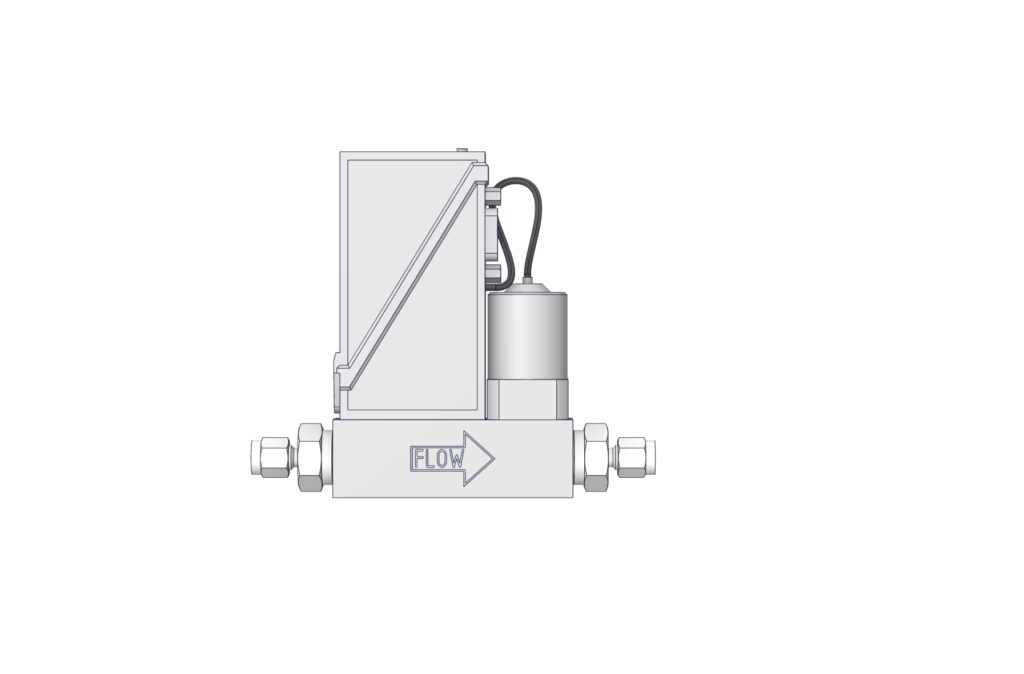
This challenging application is a textbook case for a precision gas diluter. GasMix™ — in particular the Zephyr II and Aïolos III models — automatically dilutes a certified parent gas to any target concentration, with continuous and automatic calculation of the uncertainty of the produced gas.
The starting point is a concentrated, off-the-shelf certified gas standard: stable, inexpensive, certified for up to five years, and with a very narrow uncertainty value on its concentration. GasMix™ performs dynamic dilution according to ISO 6145‑7, producing traceable calibration mixtures on demand, at any concentration between the parent standard and the diluent.
Key Advantages for Hydrogen Fuel Analysis
- Generate calibration gases at exactly the concentration you need — including bracketing the unknown sample concentration for greater accuracy
- Eliminate the need for multiple expensive certified cylinders at different concentrations
- Reduce stock, simplify logistics, and improve laboratory safety
- Full traceability: Audit Trail, automatic uncertainty calculation, and PDF reporting
- Compatible with aggressive compounds: sulfur compounds, NOx, NH₃, VOCs and more
Ready to generate your own hydrogen calibration gases on-site?
Discover the GasMix™ Zephyr II and Aïolos III — purpose-built for trace-level calibration of hydrogen fuel analyzers.