Why MFC Flexibility is Redefining Modern Metrology
1. Fundamental Operating Principles: Stability vs. Agility
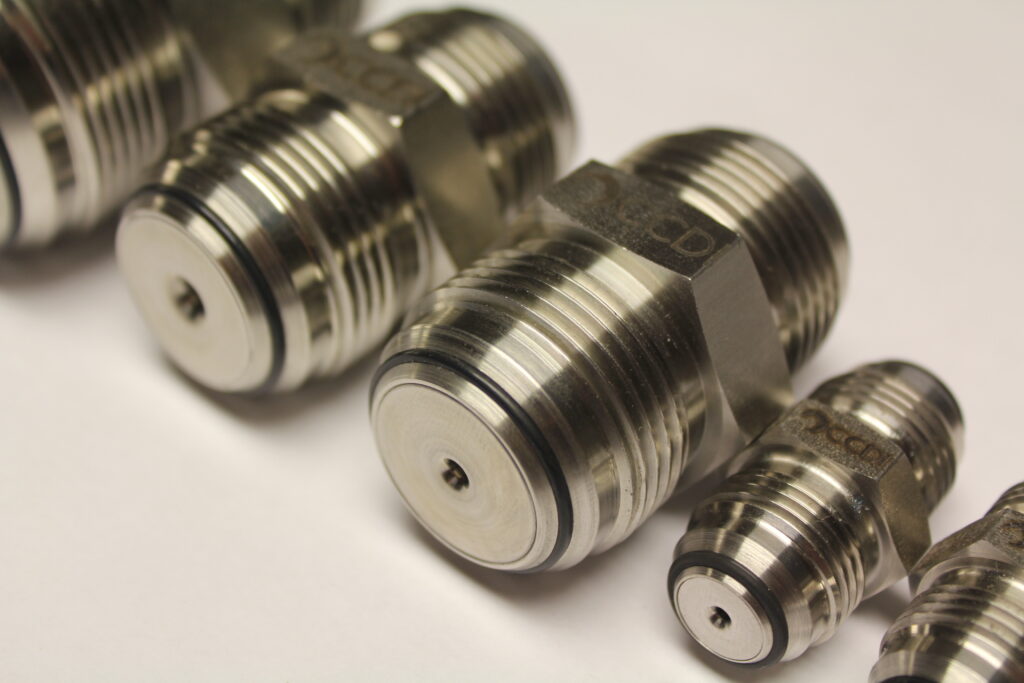
- The Sonic Nozzle (Fixed Geometry): This technology generates mass flow by accelerating gas to the speed of sound at a fixed orifice (choked flow). While mechanically elegant, it is inherently discrete; flow is locked into fixed hardware steps, requiring physical manifold changes to alter dilution ratios.
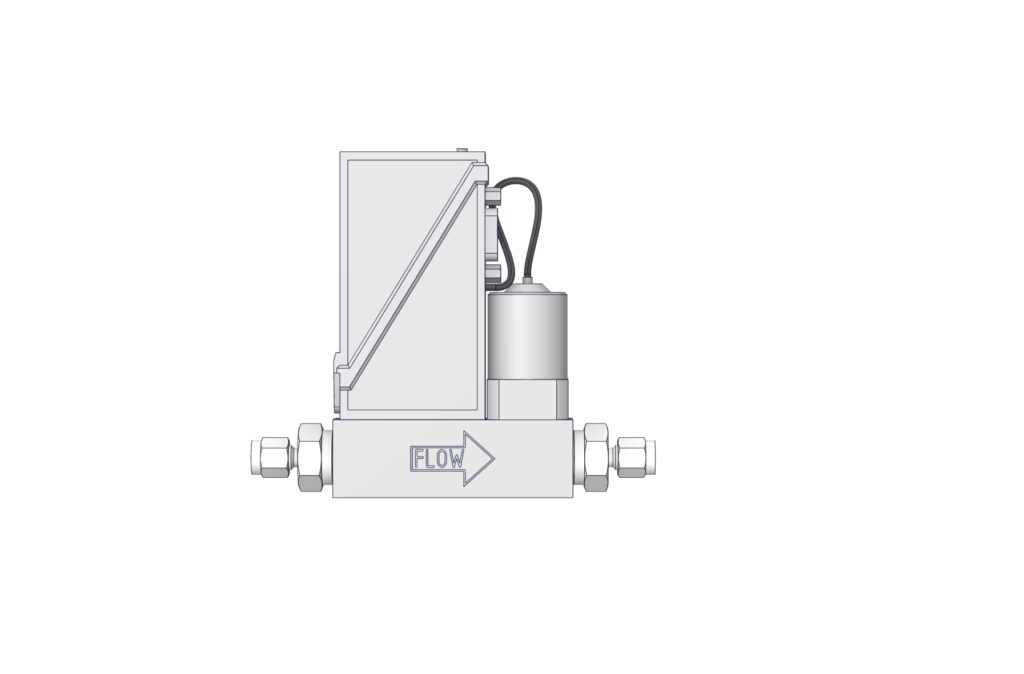
- The Mass Flow Controller (Active Regulation): MFCs utilize real-time sensors and a high-speed proportional valve in a closed-loop system. This allows for continuous and dynamic flow generation, adapting instantly to any digitally defined setpoint without hardware limitations.
2. Environmental Resilience: The Necessity of Electronics
A common misconception is that sonic nozzles are “purely mechanical” and immune to environmental flux. In reality, gas flow through a critical orifice is physically tied to upstream pressure (P) and the square root of temperature (T). Without intervention, any ambient change causes an immediate flow error.
- Sonic Nozzles (Passive/Indirect): High-precision nozzle systems use a “hybrid” approach. Sensors measure P and T, and a computer calculates the necessary correction. To maintain the target flow, the system must indirectly compensate by adjusting an electronic pressure regulator. If the temperature rises, the regulator “pushes” harder. This is a reactive chain: the system measures the environment and tries to calculate a physical fix.
- MFCs (Active/Direct): An MFC uses a proactive, closed-loop system. The sensor and the control valve are integrated into a single, high-speed loop. The MFC doesn’t care why the flow might change (whether it’s temperature, pressure, or even a microscopic obstruction); it directly adjusts the valve in milliseconds to ensure the mass flow remains constant.
While the nozzle system relies on the accuracy of its “mathematical assumptions” and pressure adjustments, the MFC provides an active defense, neutralizing environmental noise before it ever reaches the output.
3. Output Dynamics: Pressure and Flow Versatility
The physical constraints of a sonic nozzle create significant integration challenges. To maintain “choked flow,” a nozzle requires a strict pressure ratio. Typically, upstream pressure must be at least double the downstream pressure. This prevents the system from delivering gas into pressurized lines or handling significant back-pressure without losing accuracy.
MFCs provide an active buffer. They can maintain precise mass flow against much higher and fluctuating back-pressures, allowing them to be integrated into diverse setups like pressurized reaction chambers. Coupled with the ability to provide continuous, user-defined setpoints (e.g., a concentration of 12.45%), the MFC transforms gas dilution from a static hardware constraint into a dynamic, software-controlled process.
4. Maintenance: Systems Integrity and Calibration
All high-precision metrology requires regular verification. However, the architecture of each technology dictates the maintenance burden:
- Nozzle Dependency: A nozzle is only as accurate as its supporting components. If the external pressure transducer or regulator drifts, the entire system fails. Furthermore, microscopic clogging or throat erosion causes unobservable errors that require hardware replacement.
- MFC Transparency: The MFC consolidates the sensor, valve, and electronics. This integration makes performance shifts, whether a baseline deviation or a “span” (slope) error, digitally observable. When a shift is detected during a routine check, the MFC can often be realigned.
Conclusion: Embracing the Digital Standard
While the sonic nozzle remains a respected milestone in metrological history, its reliance on fixed physical geometry is increasingly at odds with the demands of modern, high-throughput science. The reality is that a high-precision dilution system (whether nozzle-based or MFC-based) is now a sophisticated electronic instrument.
The true advantage of Mass Flow Controller technology lies in its transition from passive compensation to active, closed-loop regulation. By combining infinite setpoint resolution with predictable, software-manageable drift, MFCs provide the agility and automation-readiness that static mechanical orifices simply cannot match. For the contemporary laboratory, choosing the MFC is not just about choosing a tool; it is about choosing a future-proof platform that offers the superior balance of precision, versatility, and operational efficiency.
Key Takeaways
- Active vs. Passive Control: Sonic nozzles are “hybrid” systems that must react to environmental changes through external components; MFCs are integrated, intelligent systems that actively regulate against those changes in real-time.
- System Integrity & Dependencies: A sonic nozzle is only as accurate as its supporting hardware. If the upstream pressure regulator drifts, the flow drifts. An MFC’s closed-loop architecture neutralizes these external variables internally.
- Operational Freedom: MFCs offer infinite resolution (2–100% flow) and a high tolerance for back-pressure. Nozzles are restricted by fixed physical steps and strict 2:1 pressure ratios, limiting their use in pressurized setups.
- Transparent Maintenance: While both technologies require regular verification, MFCs offer diagnostic visibility. Performance shifts, whether at the baseline or across the flow span, can often be corrected via digital realignment, whereas nozzle errors often require physical hardware replacement.
- System Integration: The proactive buffering and software-defined nature of an MFC make it the superior, future-proof platform for complex or automated laboratory environments.